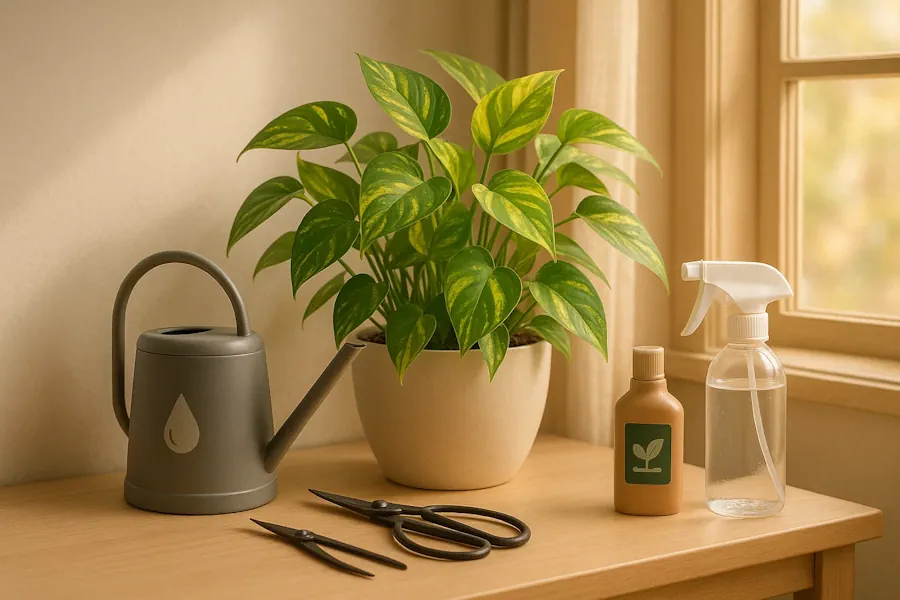
Pothos plants (Epipremnum aureum) are one of the easiest houseplants to grow indoors. Known for their attractive, heart-shaped leaves and resilience, they thrive in various indoor environments with minimal care. In this guide, we’ll cover everything you need to know to keep your pothos plant happy and healthy indoors.
Light Requirements for Pothos Plants Indoors
Pothos are quite adaptable when it comes to light, but providing the right conditions will help them flourish.
- Ideal Light: Pothos do best in bright, indirect light. Place them near a window where they can receive light, but avoid direct sunlight, which can scorch their leaves.
- Low-Light Tolerance: Pothos can survive in low-light conditions, making them perfect for rooms with limited natural light. However, in low light, their growth may slow down.
- Variegated Pothos: If you have a variegated variety (such as the Marble Queen), too much shade will cause the plant to lose its pattern and revert to solid green leaves. Conversely, bright indirect light will help preserve the variegation.
Soil for Pothos Plants
Choosing the right soil mix is essential for your pothos to thrive indoors.
- Well-Draining Mix: Pothos thrive in a well-draining potting mix. A typical houseplant potting mix is fine, but you can also opt for a mix designed for aroids.
- Soil pH: Pothos prefer slightly acidic to neutral soil, with a pH level ranging from 6.1 to 6.8.
- Drainage: Ensure your pot has good drainage holes to prevent water from pooling at the bottom, which can lead to root rot.
Watering a Pothos Plant Indoors
Watering is one of the easiest aspects of pothos care, but it’s important to do it correctly to avoid issues like root rot.
- Watering Schedule: Water when the top 2 inches of soil are dry to the touch. This usually means watering about once a week or every 10-14 days.
- Signs of Thirst: Pothos will start to droop slightly when they need water. Avoid waiting for the leaves to fully wilt.
- Avoid Overwatering: Let the soil dry out between waterings to prevent root rot. If the soil is still moist, wait a few days before watering again.
Temperature and Humidity for Pothos Indoors
Pothos are native to tropical regions, so they do best in warm and humid environments.
- Temperature: Keep your pothos in a temperature range of 65°F to 75°F (18°C–24°C). Temperatures below 50°F (10°C) can cause the plant to become stressed.
- Humidity: Pothos prefer high humidity, but they can adapt to normal household levels. To increase humidity, consider grouping plants together or using a humidifier.
How to Fertilize a Pothos Plant Indoors
Pothos require a bit of feeding to encourage healthy growth, especially during the growing season.
- During Growing Season, Fertilize your pothos with a balanced, water-soluble houseplant fertilizer once a month in the spring and summer. Look for a fertilizer with a 3-1-2 ratio.
- Winter Care: Reduce or stop fertilizing in the winter when the plant’s growth naturally slows down.
Pruning Your Pothos Plant Indoors
Pruning is an essential part of pothos care to keep your plant healthy and looking its best.
- Encouraging Bushier Growth: Trim long, leggy vines to encourage more branching and a fuller plant.
- Removing Dead Leaves: Regularly remove yellow or dead leaves to keep the plant looking neat and to prevent potential disease issues.
Repotting Your Pothos Plant Indoors
Pothos can outgrow their pots over time, so repotting is necessary to give them enough space to grow.
- When to Repot: Repot your pothos every 1-2 years or when the roots become overcrowded. Signs that it’s time to repot include roots growing out of the drainage holes or a decrease in growth.
- Choosing a New Pot: Select a pot that’s 1-2 inches larger in diameter than the current one, and be sure to use fresh, well-draining potting mix.
Common Problems and Solutions for Indoor Pothos Care
While pothos are generally low-maintenance, there are some common issues to watch out for:
- Yellowing Leaves: This is often caused by overwatering or poor drainage. Make sure the soil is drying out between waterings and ensure the pot has adequate drainage.
- Leggy Growth: If your pothos looks sparse and leggy, it may not be getting enough light. Move it to a brighter location with indirect light.
- Brown Leaf Tips: This can be a sign of low humidity or underwatering. Consider misting the plant or increasing the humidity around it.
Frequently Asked Questions (FAQs)
Q1: How do I know when to water my pothos?
Water your pothos when the top 2 inches of soil are dry. If the leaves start to droop slightly, it’s also a sign that the plant needs water.
Q2: Can pothos grow in low light indoors?
Yes, pothos can tolerate low-light conditions, but they will grow more slowly. For optimal growth, place them in a spot with bright, indirect light.
Q3: Why are my pothos leaves turning yellow?
Yellowing leaves are often a sign of overwatering or poor drainage. Ensure the soil is drying out between waterings, and make sure your pot has proper drainage.
Q4: Can I propagate my pothos indoors?
Yes, pothos are easy to propagate. Simply cut a healthy vine below a node (where the leaves grow), place the cutting in water until roots form, and then plant it in fresh soil.
Q5: How can I encourage more growth in my pothos?
To encourage more growth, make sure your pothos is in bright, indirect light, water it properly, and fertilize during the growing season. Regular pruning will also promote bushier growth.
Conclusion
Caring for a pothos plant indoors is simple and rewarding. With the right light, soil, watering habits, and occasional maintenance, your pothos can thrive for many years. Keep an eye on common issues, like overwatering or insufficient light, and your pothos will continue to grow strong and healthy, adding beauty to your home.
Leave a Reply