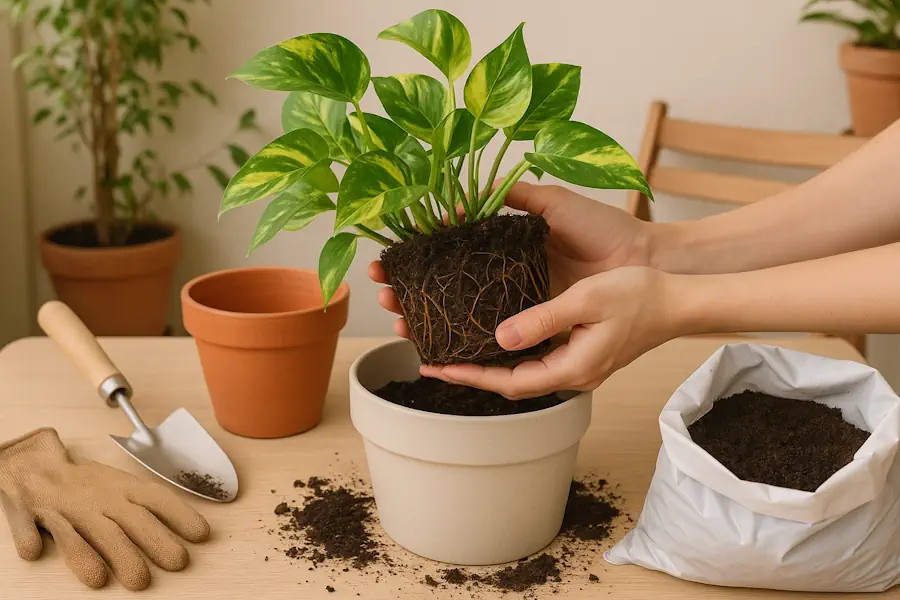
Repotting is an essential part of caring for a pothos plant, especially as it grows larger. Over time, pothos can outgrow its current pot, leading to root crowding and restricted growth. In this guide, we’ll walk you through when and how to repot your pothos to keep them healthy and thriving.
Why Repot a Pothos?
Repotting is necessary for a few key reasons:
- Roots Outgrowing the Pot: As pothos grow, their roots expand. If the roots become root-bound (too crowded), the plant may become stressed, and its growth will slow down.
- Depleted Soil: Over time, the nutrients in the soil deplete, affecting the plant’s overall health. Repotting with fresh, nutrient-rich soil helps provide the plant with the necessary nutrients for continued growth.
- Improved Drainage: Repotting gives you an opportunity to refresh the soil and ensure it has proper drainage, preventing waterlogging and root rot.
When to Repot a Pothos
It’s important to recognize when your pothos is ready for repotting. Here are the signs:
- Root Bound: If you notice roots growing out of the drainage holes or tightly circling inside the pot, it’s time to repot. Root-bound plants can’t absorb water and nutrients efficiently.
- Slow Growth: If your pothos has slowed down or stopped growing despite being in good light and receiving proper care, it may need more space in its pot.
- Water Drains Too Quickly: If the water runs straight through the pot without soaking into the soil, it could mean the roots have filled up the pot and there’s little room for the soil to retain moisture.
- Soil Depletion: If the soil appears compacted or dries out too quickly, or you notice a decline in leaf health, the soil may need to be replaced.
Best Time to Repot: The ideal time to repot your pothos is during the spring or early summer, which is the plant’s active growing season. Repotting during this time allows the plant to recover quickly and continue growing. Avoid repotting during the winter, as pothos are not actively growing, and it can stress the plant.
How to Repot a Pothos: Step-by-Step Guide
Follow these simple steps to successfully repot your pothos plant:
1. Choose the Right Pot
- Size: Select a new pot that is 1-2 inches larger in diameter than the current one. Going too big can cause the soil to retain excess moisture, leading to root rot. Ensure the pot has proper drainage holes to prevent water accumulation at the bottom.
2. Prepare the New Potting Mix
- Use well-draining potting soil, preferably one designed for houseplants or aroid plants (like pothos). You can mix in perlite or coco coir to improve drainage if needed.
3. Remove the Pothos from Its Old Pot
- Gently loosen the edges of the soil by tapping the sides of the pot or running a knife along the edges.
- Carefully pull the plant from the pot. If the plant is stuck, gently squeeze the sides of the pot or tilt it at an angle to loosen the roots. Avoid pulling too hard on the plant to prevent damaging the roots.
4. Examine the Roots
- Check for root rot. If you notice any black or mushy roots, trim them off with a clean, sharp pair of scissors.
- Loosen the root ball: Gently loosen any tangled or circling roots. This encourages the roots to grow outward into the new soil.
5. Place the Pothos in the New Pot
- Add a layer of fresh soil at the bottom of the new pot. Position the pothos in the center of the pot, ensuring that the top of the root ball is about an inch below the lip of the pot.
- Fill in around the roots with the new potting mix, pressing it gently to remove air pockets. Leave some space between the soil and the top of the pot for watering.
6. Water the Pothos
- Once the plant is in its new pot, water it thoroughly until the water drains out from the bottom of the pot. This helps settle the soil and provides hydration to the roots.
7. Place the Pothos in an Ideal Location
- After repotting, place your pothos in its usual spot with bright, indirect light. Avoid placing it in direct sunlight immediately after repotting, as the plant may be stressed.
Post-Repotting Care
- Don’t Fertilize Immediately: Wait at least 4-6 weeks before fertilizing your pothos after repotting. The new soil will have enough nutrients to support the plant’s growth during this period.
- Water Carefully: Continue watering when the top 2 inches of soil are dry, but avoid overwatering. Make sure the soil drains well to prevent root rot.
- Monitor for Stress: After repotting, it’s normal for the pothos to show signs of transplant shock, such as drooping leaves or slower growth. This should resolve within a few weeks as the plant acclimates to its new environment.
Common Mistakes to Avoid When Repotting a Pothos
- Choosing Too Large a Pot: A pot that’s too large can lead to excess moisture retention and root rot. Always go for a pot that’s just a couple of inches larger than the current one.
- Not Checking Drainage: Ensure that the new pot has adequate drainage holes. Without proper drainage, the soil will retain too much water, which can cause root rot.
- Overwatering After Repotting: While the plant needs water after repotting, it’s important not to overdo it. Overwatering can lead to stress and root rot.
Frequently Asked Questions (FAQs)
Q1: How do I know if my pothos need repotting?
If you notice that the roots are growing out of the drainage holes, the plant is growing slower, or the soil is drying out too quickly, it’s time to repot your pothos.
Q2: Can I repot my pothos into a much larger pot?
No, it’s best to choose a pot that’s only 1-2 inches larger in diameter than the current one. A pot that’s too large can lead to overwatering and root rot.
Q3: How often should I repot my pothos?
Generally, pothos need to be repotted every 1-2 years or when the roots have outgrown their current pot. However, this may vary depending on the size and health of your plant.
Q4: Should I prune my pothos before repotting?
It’s not necessary to prune your pothos before repotting, but you can trim any long, leggy vines to help encourage fuller growth after the plant settles into its new pot.
Q5: Can I reuse the old potting soil?
It’s best to use fresh soil when repotting, as the old soil may have depleted nutrients or become compacted, which can affect the health of the plant. Reusing old soil may also introduce pests or diseases.
Conclusion
Repotting your pothos is a simple yet essential task for keeping your plant healthy and promoting strong growth. By recognizing the signs that your pothos need repotting, selecting the right pot and soil, and following the correct process, you can ensure your plant continues to thrive. Remember to provide post-repotting care and give your pothos time to adjust to its new environment.
Leave a Reply